 HDM
HDMIt is graduation season in the UK.
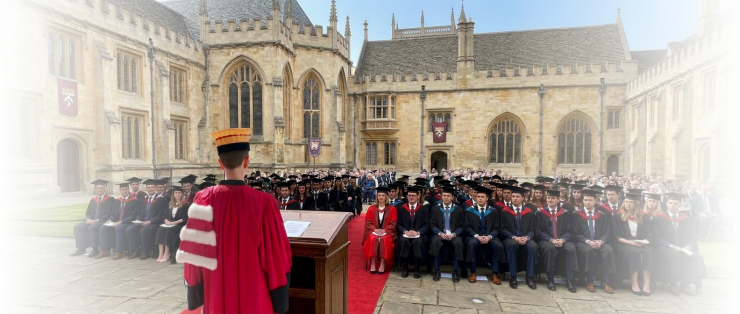
My social media feeds are full of certificates, gowns, hoods, proud families, and photographs taken on university lawns. Graduates are celebrating the culmination of years of work. Colleagues are sharing news of promotions to Associate Professor and Professor. Others are announcing new roles and preparing to begin the next stage of their careers.
The sector seems to be collectively marking its thresholds.
I am standing at one too.
I am coming to the end of my time at Buckingham and of my Visiting Fellowship at the University of Oxford. In a few weeks, my husband and I will move to Ireland, where I will begin my new role at South East Technological University (SETU).
Before then, there will be a brief pause. A few weeks in which I will no longer quite belong to what came before, but will not yet have begun what comes next.
I have written before about the value of a hiatus point: a purposeful pause in a longer journey, with the expectation that the journey will continue. I now find myself inhabiting one.
Countdown to Ireland
I have created a document called Countdown to Ireland.
It is, inevitably, a to-do list.
What should we pack? What will we need for our new home? What should I take to my new office? I already have a new little black book ready, something for which I am well known. What needs to be completed before we leave? What do I need to learn about living and working in a new country?

There are professional questions too.
How will I introduce myself and my leadership style to my new colleagues and direct reports? How will I start the work of understanding how my new institution ticks? What should I read, whom should I meet first, and what should I ask? How do I arrive ready to contribute, while remaining open enough to listen and learn?
Lists create a reassuring sense of order. Each tick suggests that the unknown is becoming slightly more manageable.
But transitions are never only logistical.
Beneath these practical questions lie deeper ones.
What do I carry with me? What should I leave behind? How do I honour the places and people that have shaped me, without assuming that what worked there will work somewhere else? How do I arrive as an experienced leader, without arriving with all the answers? A new leadership role is not a blank page. SETU already has its histories, communities, expertise, ambitions, and ways of doing things. I will bring my own experience, values, and ideas, but my first responsibility will be to understand the institution I am joining.
Moving from one senior role to another across institutions is a mutual introduction.
The person behind the job title
This is not the first time I have changed country, home, and role.
I grew up in a small village in the north-east of Scotland, where everybody knew me and I knew everybody. I moved to Brighton to study at the University of Sussex, then travelled to Toulouse for what was supposed to be a year abroad.
I stayed in France for over ten years.
I built a life there, studied and worked in French, completed my linguistics doctorate, undertook postdoctoral research, and learned that stepping into the unknown can change the course of a life.
When I returned to the UK, it was to take up a role at Oxford. From there, my career began to zigzag across the country through universities and other higher education organisations. Each move brought a new challenge, a different institutional culture, and an opportunity to learn.
I once joked that I might be keeping the removal industry in business.
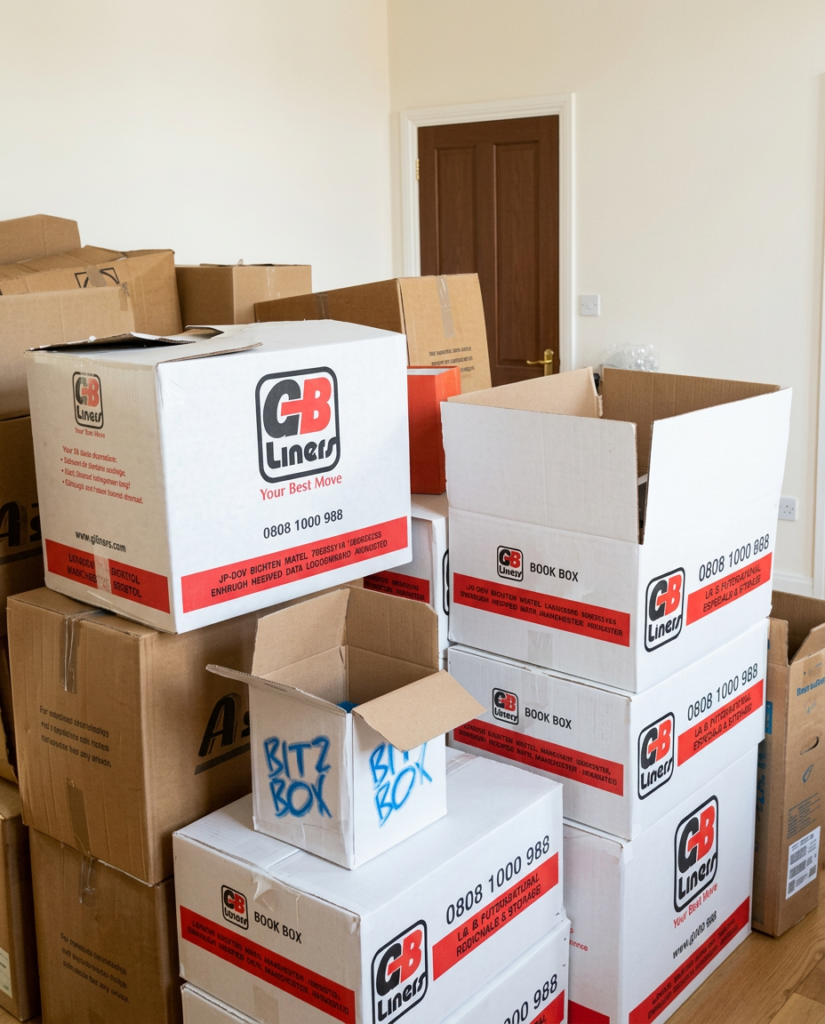
Behind the joke is the reality that none of those moves was mine alone.
My academic husband and I have zigzagged across the UK together as I have climbed the leadership ladder. Each new role for me has meant change for him too: another home, another community, another set of routines, another round of boxes, and a different journey to Oxford.
Appointment announcements usually carry one person’s name. The transition itself is lived by more than one.
I remember Dame Stephanie Shirley making the point that it is important to choose a husband well.
I did.
His support has made this journey possible, even as each move has reshaped his own. He has encouraged me to take opportunities, helped me retain perspective, and reminded me that there is a person behind the job title. He has made new places feel like home.
At the foot of the hill again
At matriculation ceremonies, I often recite from memory a short poem by Emily Dickinson:
The going from a world we know
To one a wonder still
Is like the child’s adversity
Whose vista is a hill,
Behind the hill is sorcery,
And everything unknown,
But will the secret compensate
For climbing it alone?
I share it with new students because starting university means standing at the foot of a hill. The landscape ahead is unfamiliar. The climb may be difficult. What lies beyond it cannot yet be seen.
At graduation, I return to the poem.
By then, the students have climbed the hill. They have discovered some of the “sorcery” behind it: knowledge, friendships, resilience, and capabilities they may not have known they possessed.
They have also discovered that they did not climb alone.
Their achievements were made possible by their own effort, but also by the staff who taught and supported them, the other students who travelled alongside them, and the friends and families who encouraged them, cared for them, and sometimes made sacrifices on their behalf.
Success may be awarded to an individual, but it is rarely created by an individual alone.
This year, the poem feels different.
I am simultaneously at the summit and at the foot of the hill.
I am completing one climb and preparing for another. I can look back at the landscape I have travelled, while also facing a new vista whose details I cannot yet see.
Saying thank you
Embracing a new beginning should not mean rushing past an ending.
At Buckingham, I have had the privilege of welcoming students at matriculation and celebrating them at graduation. I have worked alongside colleagues through challenge and change. I have been supported, questioned, encouraged, and trusted with significant responsibilities.
I am grateful to the students and colleagues who have shared that part of my journey.
My Visiting Fellowship at Oxford has offered a different kind of transition. It brought me back to the university where my UK career in Higher Education began, but with the experience accumulated through all the institutions and roles that followed. It gave me space to think, to bring people together, and to develop ideas about lifelong learning, student experience, and designing education for real lives.
There is something fitting about concluding that work as I prepare to begin another chapter outside of the UK.
There will be time for me to introduce the new role, the new institution, and the priorities ahead. There will be plans to develop, colleagues to meet, campuses to visit, and much to learn.
But first, I wanted to say thank you and goodbye to the colleagues across the UK Higher Education sector who have shaped my journey thus far: through my roles at the universities of Oxford, Bath, Bradford, Portsmouth, and Buckingham; during my time at UCAS and the erstwhile 1994 Group; and among my peers in the Spinnaker Group and the Lighthouse Policy Group.

A new vista
I like a challenge.
I have often chosen the route that would stretch me furthest: leaving the familiar, going somewhere I knew nobody, and learning how to make a contribution in a new environment.
I also believe that leadership benefits from experience across different institutions. Long service in one university can bring invaluable depth of knowledge, but moving between institutions offers a different perspective. Each has its own history, culture, strengths, and assumptions about how things should be done.
My career has taken me through different types of universities and higher education organisations, each facing its own opportunities and challenges. That breadth allows me to recognise patterns, question what may have come to seem inevitable, and bring ideas from one context into productive conversation with another. I hope it brings freshness to my leadership, without ever leading me to assume that an approach can simply be transplanted from one institution to the next.
That does not mean transition is effortless.
Excitement and reflection can coexist. Confidence does not remove uncertainty. Looking forward does not diminish gratitude for what is being left behind.
Perhaps that is what a genuine transition requires: the ability to hold beginnings and endings together.
My Countdown to Ireland list is gradually filling with ticks. Soon, the boxes will be packed. The goodbyes will be said. My new little black book will be opened, and a new chapter will begin. My husband and I will cross the Irish Sea and begin the work of making another place our home.
Dickinson asks whether the secret beyond the hill will compensate for climbing it alone.
I have never climbed alone.
I arrive at this new vista carrying the support, friendship, challenge, and generosity of those who have travelled with me. I carry what I have learned from every institution and community of which I have been a part. I carry the confidence that comes from having faced unfamiliar hills before.
Behind this one lies everything unknown.
That is what makes it a world of wonder still.