 HDM
HDMCurriculum Design Through Charrettes
As universities respond to lifelong learning, increasing flexibility, and more complex student lives, curriculum design has become both more urgent and more contested. Ambitious policy goals mean little unless they translate into meaningful change in teaching, learning, and assessment.
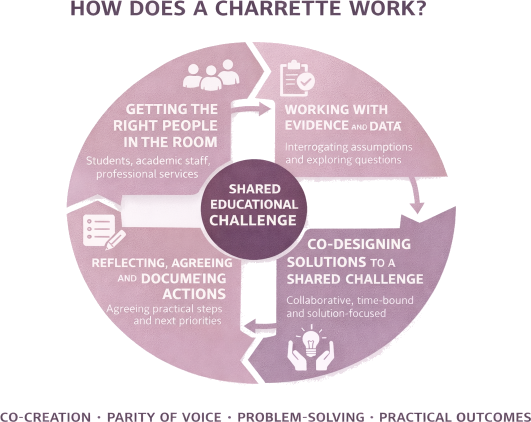
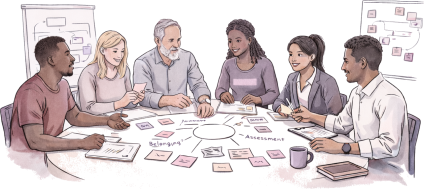
One approach I have used over many years is the charrette. Originally adapted from design and planning disciplines, the charrette is a collaborative, time-bound curriculum design workshop that brings students, academics, and professional services staff together to work on a shared challenge. Depending on the context, this may also include other key stakeholders, such as employers or professional bodies.
Charrettes create a structured but creative space for co-creation. At their heart, they are about getting the right people in the room, giving them access to relevant evidence and data, and creating the time and conditions for focused, collective problem-solving. The process is deliberately time-bound and solution-focused, while still making space for listening, questioning assumptions, and surfacing different perspectives.
Participants work with data and evidence, interrogate what it is telling them, and focus explicitly on what happens within curricula and teaching spaces. Crucially, this avoids defaulting to deficit explanations about students. The emphasis is on practical, achievable change that is developed collectively.
What makes this approach particularly relevant now is its alignment with lifelong learning. As students increasingly engage with higher education in flexible and episodic ways, curriculum design processes must foreground lived experience, assessment coherence, and a sense of belonging across different modes and life stages.
Charrettes support this by shifting curriculum change away from compliance and towards shared ownership. Students are not consulted at the end of the process, but work with staff in shaping solutions from the outset.
In a sector facing rapid change, curriculum reform is not simply a technical exercise. It is a collective endeavour. Creating the space for that work, and inviting the right voices to take part, matters. Parity of voice builds shared ownership of change and helps ensure that curriculum redesign is not something done to students or staff, but undertaken with them.
What is a Charrette?
A charrette is a structured, time-bound collaborative workshop used to design solutions to a shared educational challenge. In higher education, charrettes bring students, academic staff, and professional services colleagues together to work with evidence and data, focus on curriculum and teaching practice, and co-create practical, achievable change. The emphasis is on parity of voice, collective problem-solving, and shared ownership of outcomes.